


19 May What Is Organizational Development — and Why Does It Rarely Work?
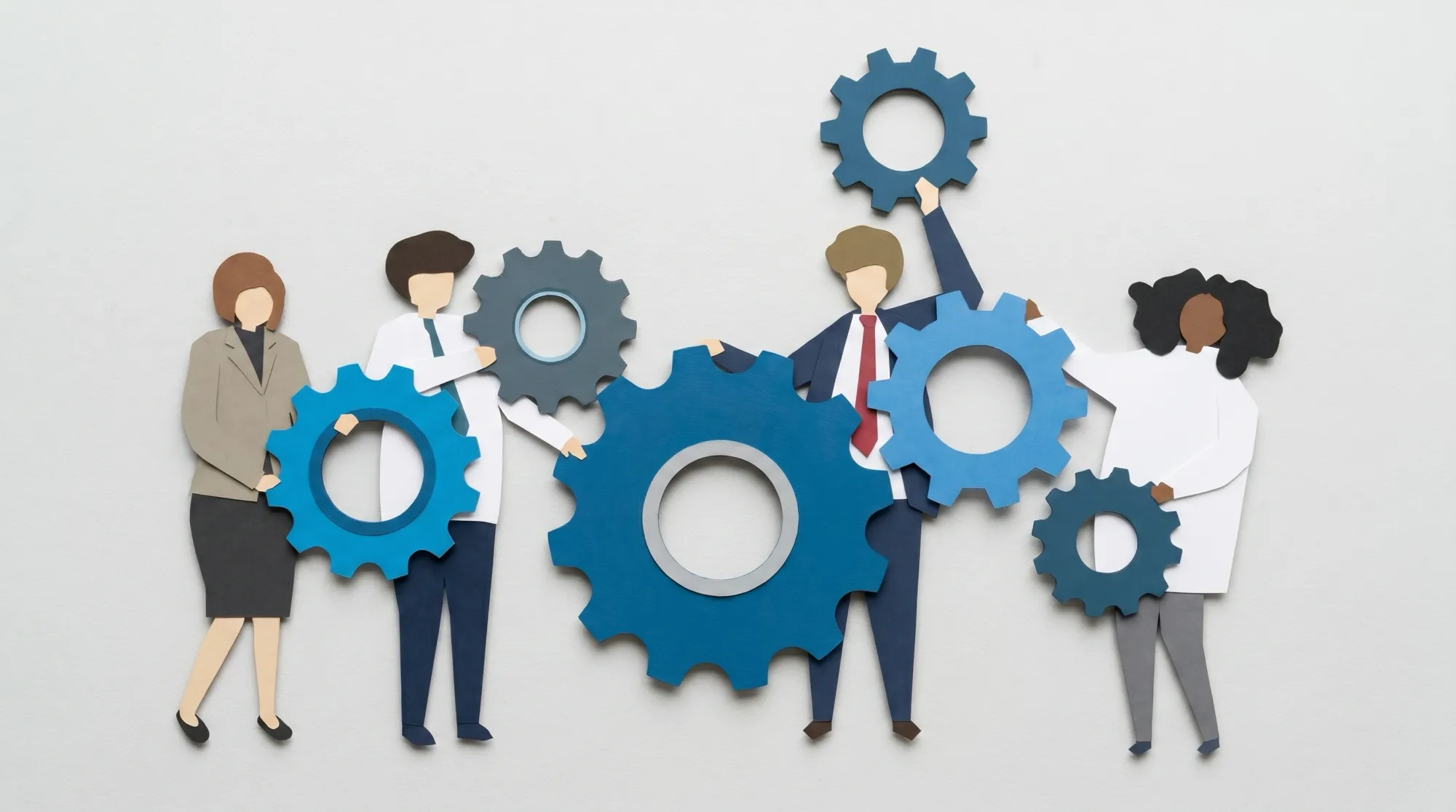
When someone brings up organizational development, they usually mean one of three things: a program that’s currently running. A problem it’s supposed to fix. Or a job opening they’re trying to fill.
What they rarely mean: a serious examination of the structures producing the behavior they’re trying to change.
That’s the core problem with organizational development as it’s mostly practiced today.
Contents
What Organizational Development Is – According to the Textbook
The Real Problem: Organizational Development Works at the Wrong Level
What Actually Works: Changing Structures, Not People
The Two Problems Organizations Don’t Distinguish
What This Means for Change Management
When External Consulting in OD Actually Helps
Where Structures Don’t Explain Everything
Conclusion: What Good Organizational Development Actually Requires Today
What Organizational Development Is — According to the Textbook
Organizational development, or OD, refers to all systematic efforts aimed at making an organization more effective, more adaptable, and more capable of handling the future. The field has its roots in applied social psychology. Kurt Lewin laid the conceptual foundation in 1947. His successors — Richard Beckhard and Edgar Schein among them — built on that work and ran the first systematic OD workshops in the mid-1960s.
Classic OD instruments include team development, vision workshops, culture programs, leadership training, change management processes, and employee surveys. Newer approaches include agile transformations, purpose processes, and New Work initiatives.
The intent behind all of this is good. The logic behind most of it is not.
The Real Problem: Organizational Development Works at the Wrong Level

Most OD operates on people. On attitudes, values, mindsets. It tries to change behavior directly — through training, coaching, and culture initiatives.
That sounds like common sense, but it’s mostly wrong.
Organizations don’t consist of people. They consist of decision structures. The same people behave fundamentally differently in different organizations because behavior emerges from context, not character. If you ignore that and try to change the people anyway, you’re treating symptoms at great expense.
The result is familiar: lots of workshops, decent impulses, short-term energy. Six months later, everything is back to where it was. Not because people are stubborn or uncoachable. But because the structures producing the old behavior are still intact.
Niklas Luhmann described this precisely. Organizations are social systems that reproduce themselves through decisions. One decision produces the next. The system is operationally closed — it follows its own logic, not the intentions of those trying to change it from outside. You can’t steer an organization from the outside. You can irritate it — create conditions under which new decisions become more likely.
Conventional OD ignores this most of the time. It assumes you can communicate values, develop culture, train people, and the organization will change accordingly. That’s a noble hope. But it doesn’t work.
What Actually Works: Changing Structures, Not People
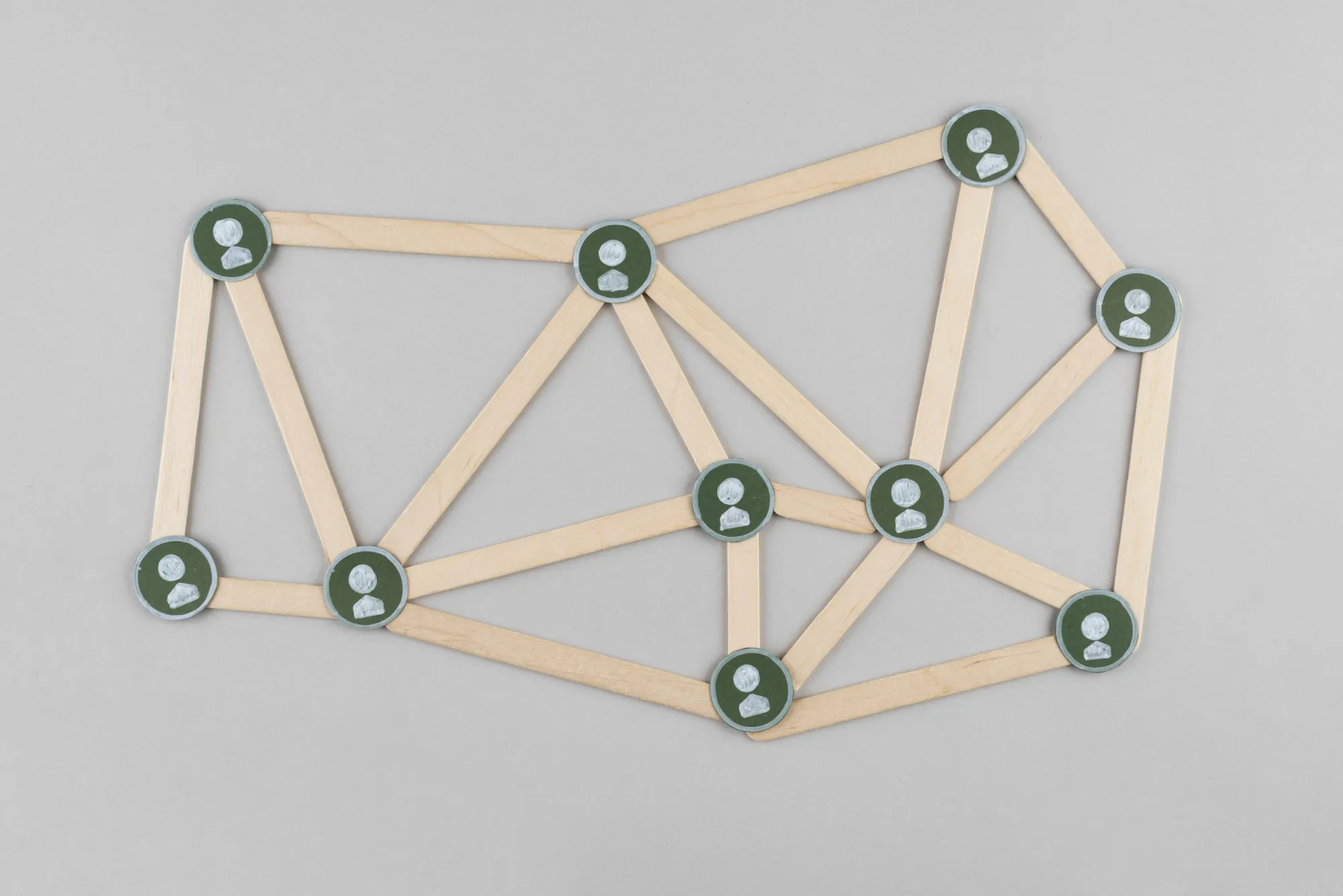
When you ask what genuinely moves organizations, the answer is consistently the same: structures.
By structures, I mean what systems theorists call the decidable premises of decision-making — simpler than it sounds. It means: who gets to decide what? What does success get measured against? Which information flows where? How are roles defined? What are the explicit and implicit rules of working together?
You can change these structures through deliberate decisions. You cannot change culture — at least not directly. Culture is the pattern that emerges when structures operate over time. If you want cultural change, change the structures and observe what follows.
That’s less spectacular than a culture program. But it works.
A mid-sized retail company in Berlin was struggling with a familiar pattern: slow decisions, low ownership in the team, constant escalations upward. Leadership was frustrated. So was the team.
The obvious response would have been an empowerment workshop. Instead, we asked a different question: which decisions is the team currently not making — and why?
The answer was telling. The team wasn’t waiting for permission because they didn’t want responsibility. They were waiting because the system required approvals: for orders above a certain amount, for personnel decisions, and for any deviation from standard process. Those approvals reliably arrived late because the responsible manager was simultaneously covering three other areas.
The problem wasn’t in the mindset. It was in the design.
We didn’t run workshops on ownership culture. We raised the approval thresholds, clarified roles, and defined which decisions the team could make without escalating. Six months later, they had opened two new locations and the manager was out of the operational day-to-day.
The Two Problems Organizations Don’t Distinguish
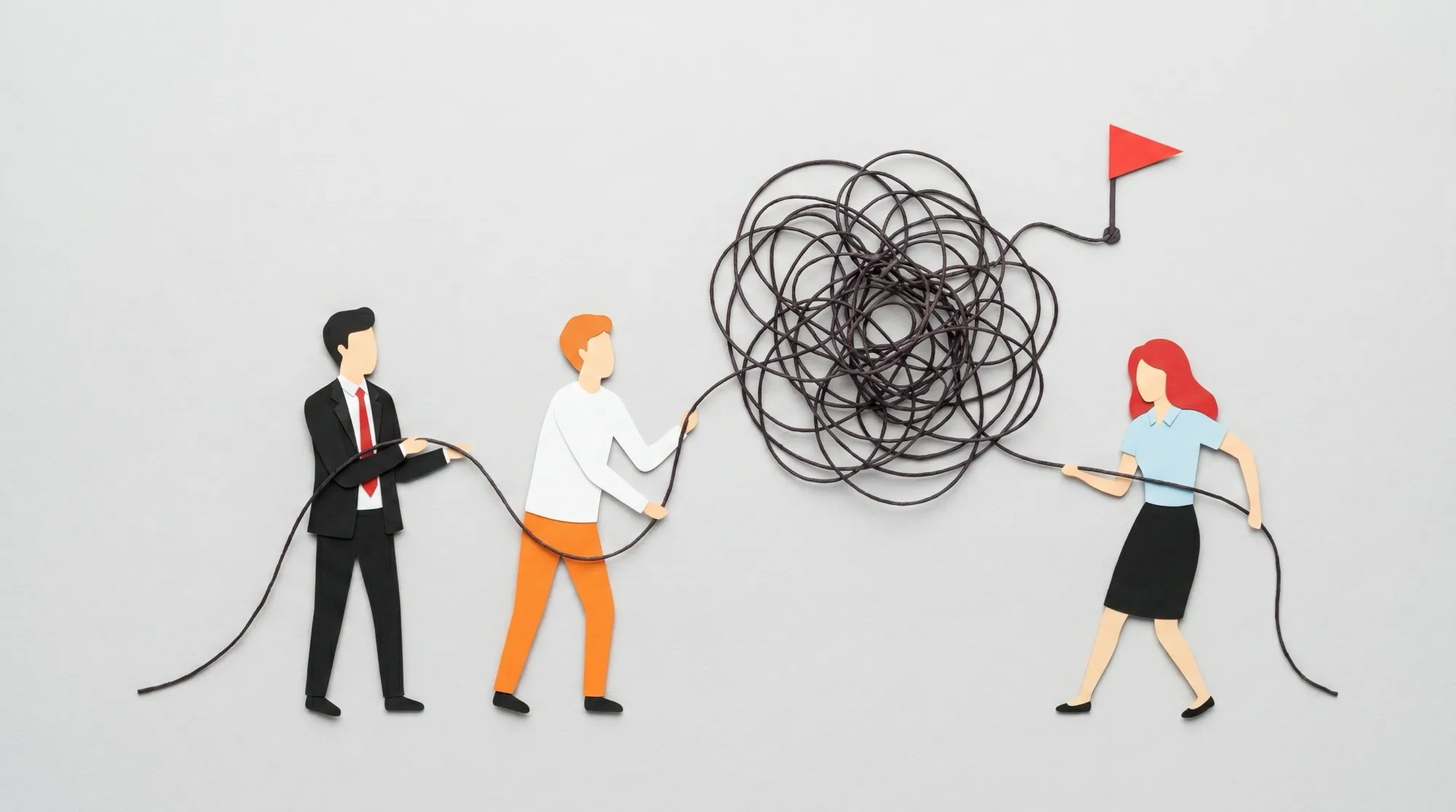
Dr. Gerhard Wohland, an organizational theorist who spent decades studying high-performance systems, developed a distinction that should be foundational to any OD work: the difference between complicated and complex problems.
Complicated problems can be solved with existing knowledge. You need to know the right method and apply it consistently. Efficiency, standards, and processes are the right tools here.
Complex problems require new ideas. There’s no known solution. Talent, judgment, and proximity to the market are what matter. Standards don’t help — they obstruct.
Most organizations treat both problem types the same way. They apply standard processes to situations that need new thinking. They build organizational structures optimized for repetition and control, and then wonder why innovation doesn’t happen.
Effective OD starts with the diagnosis: what kind of problem is this, actually? And what kind of response does it require?
What This Means for Change Management

Change management is a term that often appears alongside organizational development. And is often misused.
Conventional change management assumes there’s a state A, a target state B, and a defined path between them that can be managed. That works for changes in stable environments with known solutions.
For most of the changes organizations face today, that doesn’t apply. The path isn’t known. Neither is the target state — you can imagine it, but you can’t navigate toward it on a fixed plan.
What helps instead is not management but orientation. A clear diagnosis of the starting point. Hypotheses about what might help. Small-scale experiments. Observation and adjustment.
That sounds like agility, and the term isn’t wrong. But introducing agility as a method doesn’t solve the problem — it relocates it, sometimes making it worse, when command-and-control structures get agile labels slapped on them and self-organization gets confused with being left to fend for yourself.
When External Consulting in OD Actually Helps

External support makes sense in organizational development when three conditions are met.
First: The organization sees a problem but not its cause. An external perspective helps identify patterns that are invisible from inside — because you’re part of the system.
Second: The diagnosis requires distinctions the organization doesn’t internally have. Not every leader knows the difference between a structural problem and a cultural phenomenon, or why the same intervention worked elsewhere and isn’t working here.
Third: The change needs someone who stands outside the internal power dynamics. Certain things can’t be said internally without causing damage. From the outside, that’s sometimes possible.
What external consulting cannot do: implement changes the organization doesn’t want. Force attitudes or values through training. Shape an organizational culture from the outside.
Where Structures Don’t Explain Everything

I hold to the core thesis: structures override behavior. That’s the primary lever, and anyone who doesn’t start there is wasting time.
But there’s a second class of problems I can’t ignore. A leader who avoids decisions out of fear of conflict. A founder who won’t delegate because he can’t tolerate losing control. A leadership team that has structurally set everything up correctly and still delays every difficult decision.
In those situations, the problem isn’t in the design. It’s in psychological patterns that undermine the design.
Klaus Eidenschink, an organizational psychologist and systemic coach, describes this precisely. He calls it a “self-amputation” when organizational consulting works only on structures and treats psychological dynamics as a private matter. His critique isn’t directed against the systems-theoretical perspective, but against a too-narrow reading of it: the assumption that people can’t change and should therefore be excluded from the equation.
That’s right. Structures create the conditions for good behavior. But when a person in a key role can’t recognize or work on their own patterns, the best structure can’t compensate. Then you need both: work on the design and work on the person carrying it.
That’s not a contradiction of the structural perspective. It’s its extension.
Conclusion: What Good Organizational Development Actually Requires Today
Effective OD in dynamic environments doesn’t need better methods. It needs clearer diagnoses.
Concretely: distinguish whether a problem is in the design or in the behavior. Change structures before sending people to workshops. Run experiments instead of rolling out programs. Reduce internal reference points rather than adding new ones. Measure success in the market, not in engagement scores.
That’s less comfortable than a culture program. But it’s more honest. And it works.
With one qualification: where psychological patterns in key people undermine structural change, you need both. Work on the design and work on the person.
Get in Touch
If you notice the same problems recurring, that initiatives fizzle, that training changes little — it’s worth looking there first: at the structures. And where psychological patterns complicate the picture, at the people too.
In an initial conversation, I look together with you at where the real leverage points are in your organization. No charge, no pitch, no obligation.