


10 Sep Decision Premises in Organizations: Why Your Decisions Keep Falling Flat

Maybe this sounds familiar. You make a clear call, communicate it well, everyone nods along, and three months later, everything’s still running the same as before, just dressed up in new vocabulary.
That’s rarely down to bad communication or not pushing hard enough. Usually it’s a category error. You tried to decide something that can’t actually be decided.
Here’s why: every business runs on two different kinds of premises, and everything else gets built on top of them. Some you can change by decree. Others shrug off any instruction you throw at them. The distinction sounds trivial, but it’s what decides whether your next leadership call lands or just evaporates.
Contents
The Decision Was Clear. Nothing Changed Anyway
Decidable and Undecidable Decision Premises: The Distinction That Matters
The Thinking Error Behind Most Decisions That Don’t Land
How to Influence Undecidable Premises Without Trying to Control Them
What This Means for Your Next Decision
Conclusion: Why Decision Premises Are the Real Lever in Your Organization
The Decision Was Clear. Nothing Changed Anyway

A Real-World Example
Picture a mid-size manufacturing company, around 200 employees. It shows just how easy this is to miss.
For months, requests have been slipping through the cracks. Short-notice customer orders sit unanswered because sales and production only coordinate when they happen to, a call here, an email there, depending on who’s around. Customers complain about slow response times, and internally, the two departments keep pointing fingers at each other.
So leadership decides: from now on, sales and production will sync up in a weekly planning meeting. The goal is faster turnaround on short-notice requests and less friction between the two sides.
The decision gets communicated, the meeting gets set up, and it happens every week like clockwork. Six months later, customer requests are still moving through the same old informal channels. People show up to the meeting and dutifully report on things, but the actual coordination still happens directly between the sales lead and the production lead, two people who’ve worked together for years and barely need words to understand each other. The meeting turns into a formality.
What actually got decided here was something decidable: a new committee, a new slot on the calendar, a new rule. The trust the two managers had built up over years of going around the official channels, though, was never really up for grabs. It couldn’t have been, and that’s exactly what this piece is about.
Decidable and Undecidable Decision Premises: The Distinction That Matters

There’s a name for this: decision premises, a term coined by sociologist Niklas Luhmann. Luhmann is considered one of the most influential systems theorists of the 20th century, and his organizational theory still underpins a lot of the thinking tools modern organizational consulting relies on, even if his name rarely comes up in the boardroom.
Decision premises are earlier commitments that quietly steer the decisions a company makes day to day, without getting re-examined every single time. An org chart is one. So is a job description, so is an approval workflow. They determine who gets to decide what, how a process runs, and which paths information takes.
🔓 Decidable Decision Premises
These premises can be formally set and checked. You can redraw an org chart, rewrite a job description, redesign a process, and if it comes to it, you can tell whether someone is following it. Typical examples:
Roles and responsibilities: what a team lead can decide without checking in first
Meeting formats and communication channels: whether a customer request goes through a shared system or through the direct line between two people
Approval and sign-off processes: who can approve an invoice above what amount
Hiring decisions: who gets hired, and who ends up in which role
🔒 Undecidable Decision Premises
Then there are premises nobody ever formally decided on, and that no one ever could. The trust built up between the two department heads in our example belongs here, along with unwritten rules about who gets to speak first in a meeting, or a general sense of what counts as a good contribution around here. What’s left over, the part that won’t hold still long enough to become a checkable rule no matter how hard you try, is what we usually call culture.
The Thinking Error Behind Most Decisions That Don’t Land
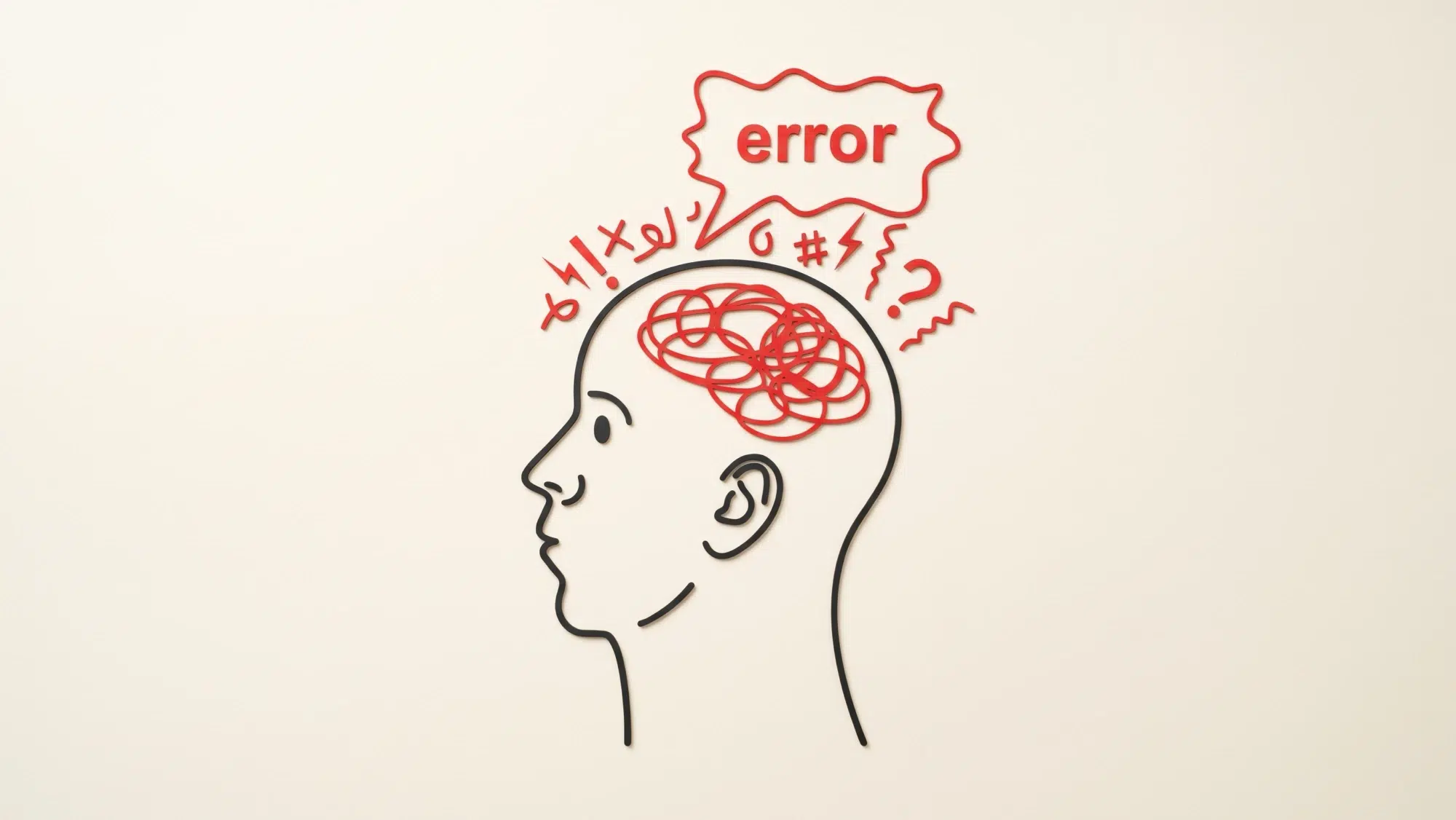
Leadership’s mistake in our example wasn’t the decision itself. A joint planning meeting isn’t a bad idea. The mistake was assuming that this one decidable move would also take care of the undecidable pattern sitting underneath it.
Culture resists being decided by decree precisely because it lacks what a formal rule needs: full verifiability. You can mandate that everyone switches to first names starting tomorrow. Whether that closes the distance between people, or the distance just finds a new outlet, say, in who gets more airtime or who speaks first, isn’t something one rule can settle. Management can proclaim values. What it can’t do is formally enforce them, because nobody can fully pin down what would count as a clear-cut violation.
Miss this distinction, and you end up almost inevitably in values programs, mission statements, and culture workshops that eat up a lot of attention and change very little. Not because the people involved are unwilling, but because the format was aimed at the wrong target from the start. I’ve written more on how this blind spot shows up specifically around company culture: why company culture cannot simply be decided.
How to Influence Undecidable Premises Without Trying to Control Them

Undecidable doesn’t mean unchangeable. It just means you can’t steer it directly. It shifts in response to whatever stays decidable around it.
The real lever isn’t steering the behavior itself, but changing the decidable conditions that made that behavior rational in the first place.
In our example, that would mean: not setting up another meeting, but removing the infrastructure that had been propping up the direct line between the sales lead and the production lead. If customer requests are captured exclusively through a shared system both department heads can see, and responsibility for short-notice requests is reassigned so it no longer automatically falls to the same two people, the old direct line loses its function. Not because anyone banned it, but because the structure that used to carry it no longer exists.
The difference from the original fix: response speed used to depend entirely on whether those two specific people happened to be reachable and talking to each other, a matter of availability and rapport more than anything else. Now it depends on a system that doesn’t hinge on two particular people. That was the actual problem behind the delayed customer requests in the first place.
Whether and how the trust between the two of them shifts as a result remains anyone’s guess. What’s certain is that another meeting wouldn’t have changed a thing.
What This Means for Your Next Decision

Before you make a decision meant to change behavior or attitude, it’s worth asking yourself three questions:
1️⃣ Am I deciding something decidable here, a role, a process, an area of responsibility? Or am I trying to act directly on a pattern that’s beyond my reach to decide?
2️⃣ How would I know in three months whether this decision was followed? If nothing concrete comes to mind, I’m probably targeting culture instead of structure.
3️⃣ What decidable condition would need to change for the behavior I want to see to become the obvious choice for everyone involved?
These questions aren’t a tool or a method you’re supposed to work through. They don’t replace analysis. All they do is stop you from pouring energy into a decision that never had the power to move anything in the first place.
A practical tip: If your next decision specifically comes down to who gets to decide within a team, “Team Decision Making in 7 Steps: A Practical Guide” walks through that step by step. (Link coming soon)
Conclusion: Why Decision Premises Are the Real Lever in Your Organization
Most leadership decisions don’t fail because of a lack of authority or poor communication. They fail because they’re aimed at the wrong premise. Anyone trying to decide culture, trust, or attitude by decree is sinking effort into something that was never built to be decided.
The more effective path is less dramatic, which is exactly why it’s easy to miss: shape the decidable premises so the behavior you want emerges on its own, instead of ordering it into existence. It’s not a shortcut or a trick, just a more honest account of what leadership in a company can really do.
If your next decision doesn’t land, the first question isn’t why nobody’s sticking to it. The first question is whether what you decided was something people could actually stick to.
For more on why classic approaches to organizational development tend to fail at exactly this point, read why organizational development rarely works at scale.
Get in Touch
If you’ve just made a decision that looks solid on paper but isn’t moving anything in practice, it’s worth asking which premise you were trying to decide on.
In an initial conversation, I’ll sit down with you and map out where the real leverage points are in your business. No charge, no pitch, no obligation.